After a windshield replacement
The forward-facing camera usually mounts to the glass, so swapping the windshield moves it. It needs recalibrating before lane-keep and forward-collision systems can be trusted.
Falamos PortuguêsHablamos Español
Mon–Fri: 8am–5pmAdvanced Safety Systems
The safety features that watch the road for you only work when they are aimed correctly. Our ADAS-certified technicians recalibrate them to factory spec, then verify the result before you drive off.
The work, in depth
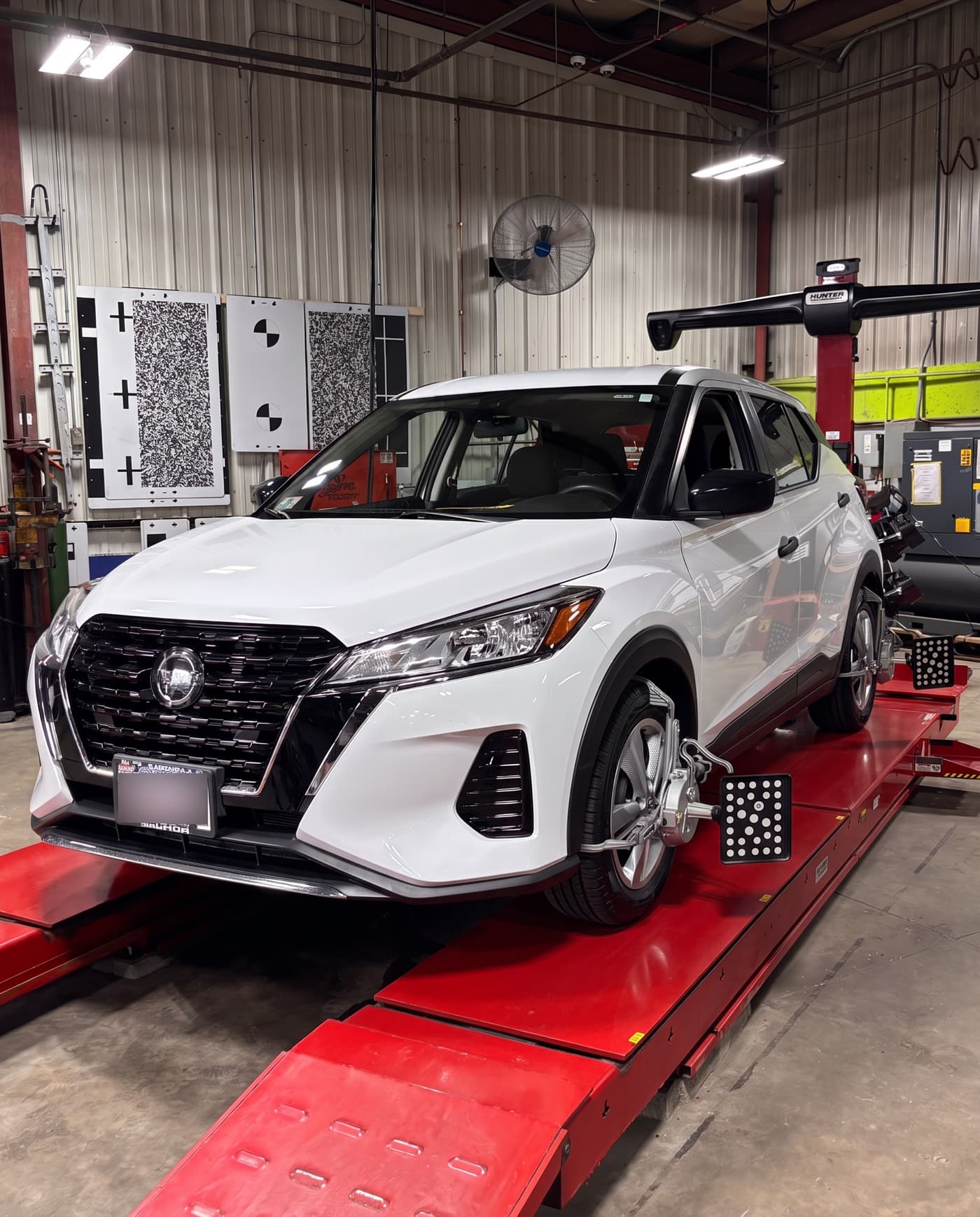
ADAS stands for Advanced Driver Assistance Systems: the cameras, radar, and sensors behind lane-keep assist, automatic emergency braking, adaptive cruise control, blind-spot monitoring, forward-collision warning, parking sensors, and your backup or 360 cameras. These parts see the road for you, and they only see it correctly when they are aimed to the manufacturer's exact specification.
Certain repairs move or disturb those sensors, which means they have to be recalibrated afterward. We scan the vehicle to confirm which systems are affected and which calibration method applies, then bring them back to spec and road-test the result. You get a written, fixed-price quote before any work begins.
Quick facts
What’s included
Know the signs
The forward-facing camera usually mounts to the glass, so swapping the windshield moves it. It needs recalibrating before lane-keep and forward-collision systems can be trusted.
Changing the vehicle's alignment shifts the reference the sensors rely on, so several driver-assistance systems need to be recalibrated to match.
Suspension changes affect ride height and sensor angles, which can throw off the aim of radar and cameras until they are recalibrated.
Front radar and parking sensors often sit behind the bumper or grille. Removing or repairing those areas means the systems have to be recalibrated.
A lit warning for lane-keep, cruise, or collision systems is your car telling you a sensor is out of spec or needs attention.
Phantom braking, lane-keep tugging the wheel the wrong way, or blind-spot alerts firing at nothing all point to sensors that are reading the road incorrectly.
How it works
We scan the vehicle to see which ADAS systems are present and affected, and determine which calibration method (static, dynamic, or both) the manufacturer requires.
We calibrate to the manufacturer's specification, using in-shop targets at set distances for static calibration and a controlled road drive at set speeds for dynamic. You get a written, fixed-price quote before work begins.
We confirm the calibration held, clear any related codes, and road-test the vehicle so the systems react correctly before you get your keys back.
Straight pricing
Calibration starts with a diagnostic to confirm which systems are involved and which method applies, and that fee is credited toward the repair. You will always get a written, fixed-price quote before we begin.
What affects the price
Common questions
Still not sure? Give us a call at (508) 730-2282 and we’ll talk it through.
ADAS refers to the cameras, radar, and sensors behind features like lane-keep assist, automatic emergency braking, adaptive cruise control, and blind-spot monitoring. They have to be aimed to a precise specification. If the aim is off even slightly, the systems can react late or misread the road, so recalibration keeps them working the way they should.
In most cases, yes. The forward-facing camera that runs lane-keep and forward-collision systems usually mounts to the windshield, so replacing the glass moves the camera and it has to be recalibrated to work correctly.
It depends on the vehicle and whether it needs static calibration, dynamic, or both. Static work happens in the shop with targets, while dynamic calibration requires a road drive at set speeds. We will give you a realistic timeframe with your written quote.
We work on domestic and import vehicles, and our technicians are both ASE-certified and ADAS-certified. We follow each manufacturer's own calibration procedure for the systems on your specific vehicle.
Related services
OEM-level scan tools across all makes. We read the codes, then verify against the real symptom before we quote a repair.
Conventional, blend, or full synthetic, plus fluid services, filters, and wiper blades. Book a time and go.
Factory-scheduled service, mileage milestones, and tune-ups that keep your warranty intact.
Ready when you are
We start with a diagnostic to pinpoint the problem, then schedule any repairs once you've approved a written quote.